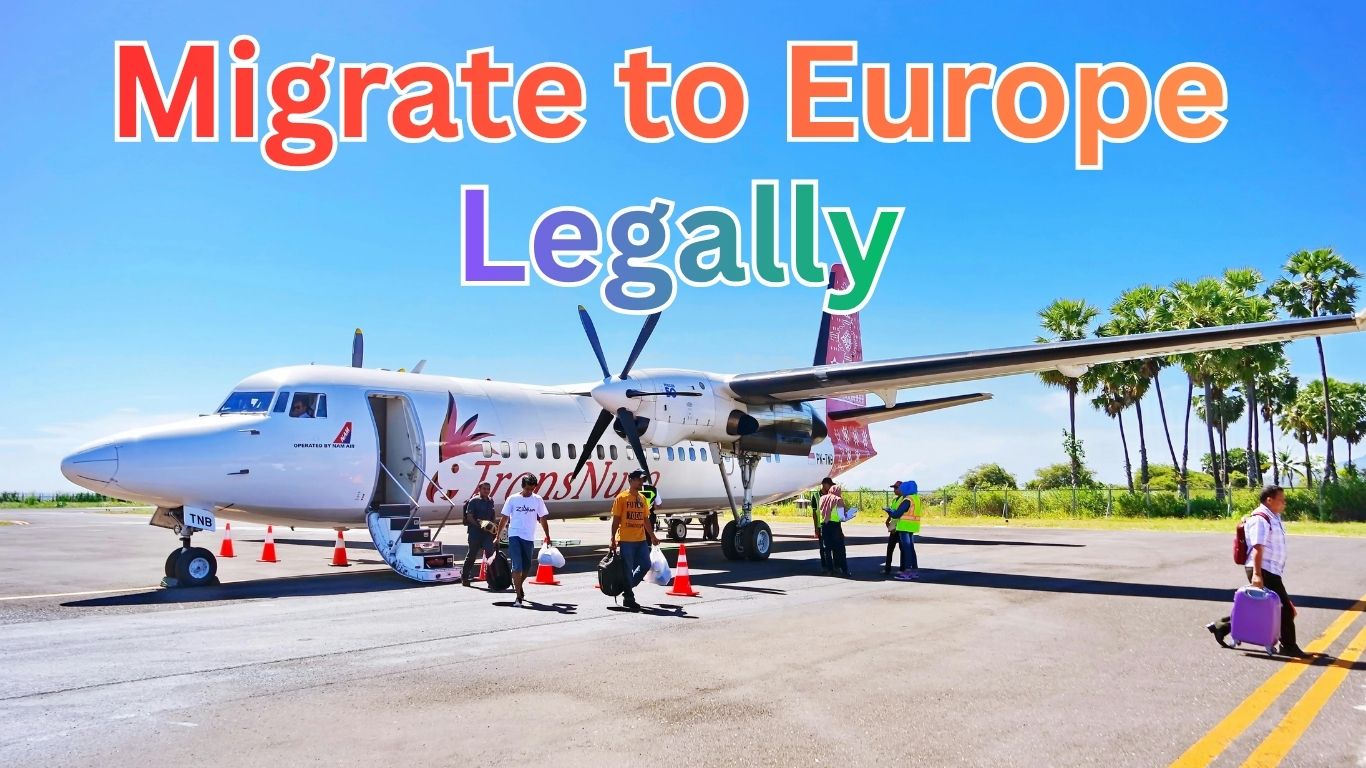
Interested in how to migrate to Europe legally?
Here are the details list and easy ideas to migrate to Europe legally.
Migration to Europe requires more than just packing your bags. It demands research, patience, and an understanding of the right visa pathways.
While social media often paints it as a smooth journey, the real process involves deliberate planning and knowing what fits your personal goals.
Whether you are going for a job, education, or permanent relocation.
This post will explain the practical steps that individual can take, based on real immigration systems and experiences across countries such as Germany, Portugal, France, and the Netherlands.
It will show you how to migrate to Europe through legitimate means, prepare your documents, and settle properly once you arrive.
What Does it Mean to Migration to Europe
Migration is more than buying a ticket or getting a visa stamp. It’s a decision that changes your life.
Before starting, you need to understand the type of migration that suits your purpose.
Europe offers different routes such as
Short-term migration
This is for those attending conferences, visiting family, or exploring business opportunities.
Study migration
This allows foreigners to study at European universities while opening doors to post-study work opportunities.
Work migration
This is where skilled and semi-skilled individuals fill the shortage gaps in various industries.
Permanent migration,
This is for those seeking long-term residence or citizenship through family, work, or investment channels.
Each route carries different requirements and levels of commitment.
Knowing your reason for relocating is the foundation for understanding how to migrate to Europe in a way that is both legal and sustainable.
Finding Your Legal Pathway
The first major step is finding the legal pathway that fits your background.
Europe’s migration system has different processes and the best way to avoid mistakes is to identify which route you qualify for.
Below are some of the most recognised and practical pathways to migration in Europe.
1. Work Migration Route
Several European countries offer structured work visas to attract skilled and semi-skilled professionals.
Germany’s Skilled Workers Immigration Act is one of the most straightforward.
It allows foreigners with professional qualifications, such as engineers, IT experts, nurses, and electricians, to apply for residence and work permits.
Applicants must have their certificates evaluated through Anabin, Germany’s foreign qualification recognition database.
The EU Blue Card, available in countries like Germany, Belgium, and the Netherlands.
It is for highly skilled workers with university degrees and a job offer with a specified minimum salary.
Portugal’s Job Seeker Visa lets you enter the country to find work, and once employed, you can apply for a residence permit.
2. Study Migration Route
For many foreigners, studying abroad is the most reliable path.
Germany offers tuition-free education at public universities.
They require only proof of funds usually around €11,000 in a blocked account and a German language proficiency certificate (A2 or B1 level).
France provides affordable tuition with numerous English-taught programmes.
A foreign student can later transition to a work visa after graduation.
The Netherlands is known for its post-study work visa, allowing international graduates to stay for a year and look for employment.
3. Skilled Trades and Vocational Routes
If you’re not a university graduate, you can still explore Europe through vocational or trade-based migration.
Countries such as Germany, Austria, and Denmark welcome foreign workers in construction, caregiving, and mechanical trades.
Some of these jobs may only require secondary education and relevant certifications.
4. Family Reunification and Marriage
Those with family members legally living in Europe can apply for family reunification visas.
Similarly, Foreigners married to European citizens can gain residency rights, though the process requires careful documentation and legal compliance.
Choosing your route early shapes your journey.
The clearer your goal, the smoother your experience with how to migrate to Europe becomes.
Preparing Your Documents Before Applying
Preparation is everything when migrating. The success of your application often depends on the strength and authenticity of your documents.
Below is a practical checklist of what every foreigner should prepare.
• Valid International Passport
Your passport must have at least six months’ validity. Renew it at your country’s Immigration Service before starting any application.
• Educational and Professional Certificates
If you’re going for work or study, your certificates must be recognised in the host country.
Use Anabin for Germany or ENIC-NARIC for other EU states to verify your qualifications.
Get your academic transcripts from your institution early.
• Proof of Funds
European countries require evidence that you can sustain yourself during your stay.
This is usually bank statements or a blocked account, depending on the visa type.
• Police Clearance and Medical Reports
You’ll need a police clearance certificate to show that you have no criminal record.
Medical reports, especially for work or study visas, are also required.
• Document Authentication
Authenticate your certificates at your country’s Ministry of Education, then legalise them at the Ministry of Foreign Affairs before submitting them to the embassy.
Being well prepared makes your process smoother and shows that you’ve done your homework on how to migrate to Europe responsibly.
Applying for the Right Visa
This is where the process becomes real, applying at the embassy or visa centre.
Every country has specific steps, but the following guide captures what most African countries generally expect, especially Nigeria.
Identify the Right Embassy and Visa Type
If you’re going to Germany for work or study, submit your application at the German Embassy in Abuja or the Consulate in Lagos.
For Portugal, use the VFS Global centre in Lagos or Abuja. Always confirm which Schengen country covers your intended destination.
Fill the Online Form Accurately
Don’t rush this step. Mistakes in names, addresses, or document numbers can cause rejection.
Pay Visa Fees and Book Appointments
Payment methods differ by country, some require online payments while others accept at the visa centre.
Prepare for the Interview
Be ready to explain your plans, source of funds, and reasons for choosing that country.
For instance, if applying to Germany, mention how you’ll integrate through language learning or cultural adaptation.
Common Mistakes to Avoid
Submitting fake bank statements or invitation letters.
Not showing enough proof of funds.
Giving inconsistent information during the interview.
If you follow this process diligently, how to migrate to Europe becomes less confusing and more structured.
Securing Accommodation and Job Offers Before Departure
Many foreigners struggle with accommodation and job offers even after getting their visas.
Planning these before departure saves stress and money.
Here’s a realistic approach.
1. Finding Accommodation
Use verified platforms such as:
HousingAnywhere
WG-Gesucht for shared apartments in Germany
Spotahome and Immoweb for Belgium and France
Avoid paying rent before physically inspecting the property or confirming the landlord’s identity.
2. Securing Job Offers
For skilled and semi-skilled workers, the following are trusted job search portals
EURES – The European Job Mobility Portal which is official EU platform
LinkedIn Europe
Indeed EU
Always verify companies through their official websites or business registration numbers.
3. Avoiding Recruitment Scams
No genuine European company will ask for payment before issuing a job offer. Be wary of anyone claiming to guarantee a visa.
A well planned accommodation and job strategy keeps you financially stable and confident once you arrived.
It’s a vital part of understanding how to migrate to Europe successfully.
Arrival and Settlement Process in Europe
Once you land in your destination country, the next phase begins which is settling legally and comfortably.
This phase determines how well you integrate and adapt to your new environment.
Residence Registration
In Germany, register your address at the Bürgeramt which is the citizen’s office.
In the Netherlands, obtain your BSN (Burger Service Number), which functions like a tax ID.
Health Insurance and Bank Account
Health insurance is compulsory in most European countries. Choose a local insurance provider immediately after arrival.
Open a local bank account for receiving salaries and paying bills.
Tax and Work Registration
When you start working, you’ll be issued a tax number.
Ensure you pay your taxes promptly, as this contributes to your eligibility for permanent residency later.
Adjusting to Cultural Differences
Expect cultural shock at first, from food to language and social systems.
Joining local communities and taking language classes will help you blend faster.
Cost of Living Awareness
Countries like Germany and the Netherlands have higher living costs compared to Portugal or Poland.
Budget carefully and plan your finances before leaving your county.
Settling properly shows maturity and respect for your new host country.
It is an essential mindset for anyone learning how to migrate to Europe the right way.
Pathways to Permanent Residency or Citizenship
This is the dream stage when you’ve built a life in Europe and want to stay for the long term.
Below are clear routes most European countries offer.
Permanent Residency
You can apply for permanent residency after living legally for five years.
You must have a clean criminal record, consistent tax payments, and proof of integration.
In Germany, you’ll need a B1 language certificate and evidence of steady income.
In Portugal, after five years of residency, you can apply for a permanent residence card with proof of accommodation and social contributions.
France requires stable earnings and basic language skills.
Citizenship through Naturalisation
Citizenship comes later, usually after holding permanent residency for some years.
It allows you to vote, own property, and travel visa-free across the EU.
Citizenship through Marriage or Birth
Marrying a European citizen or having a child born in certain EU countries can speed up the process, though strict checks apply to prevent abuse.
Integration and Social Contributions
The key to earning long-term rights in Europe is integration such as learning the language, understanding laws, and respecting the culture.
Governments value migrants who contribute positively.
Knowing these pathways helps foreigners realise that how to migrate to Europe is not only about getting a visa but also building a sustainable life.
Common Challenges and How to Overcome Them
Even with the best preparation, migrants often face hurdles in Europe.
Below are real challenges migrants encounter and practical ways to overcome them.
Language Barriers
Most European countries require at least basic proficiency in their official language.
Take language classes in your country before travelling, or enrol immediately after arrival.
Apps like Duolingo, Babbel, or Goethe-Institut courses help greatly.
Homesickness
Missing family and friends is natural.
Join community groups or local African churches. Building a small social circle eases the emotional stress.
Employment Adjustment
It may take time to find a job that matches your qualifications.
Be open to entry-level roles and keep improving your skills. Many migrants start small before landing better opportunities.
Cultural Shock
The European work culture values punctuality and independence.
Learn workplace etiquette and understand cultural differences. Respecting rules helps you gain trust and professional growth.
Legal and Immigration Issues
Visa renewals and document updates can be stressful.
Always monitor your visa expiry dates and seek help from immigrant support organisations if in doubt.
Facing these challenges with resilience proves that you not only know how to migrate to Europe but also how to thrive there.
Conclusion
Migration is a life-changing journey. It’s not about escaping your country but about expanding your opportunities.
The question of how to migrate to Europe has no single answer, it depends on your goals, qualifications, and determination.
What remains constant is that legal and well planned migration always leads to better outcomes.
Europe rewards effort, discipline, and skill. Migrants who prepare well, apply honestly, and integrate respectfully often find themselves not just surviving but thriving.
Even if it’s a student in Berlin, a nurse in Lisbon, or a mechanic in Rotterdam, every success story begins with taking the legal path and stay consistent.
If your dream is to start anew, plan early, stay informed, and follow the right process.
Your determination, not desperation, will define your success.
Europe is not just a destination, it’s a new beginning for those who prepare wisely.
Similar Post